Japan Airlines (JAL) has teamed up with four regional companies in the Japan Railways Group to launch a new tourism initiative focused on three legendary Japanese pilgrimage routes. JR East, JR Central, JR West, and JR Shikoku are all taking part in the project, which aims to shift travelers away from overcrowded urban centers and toward enriching regional experiences that combine memorable hikes with deep spiritual journeys.
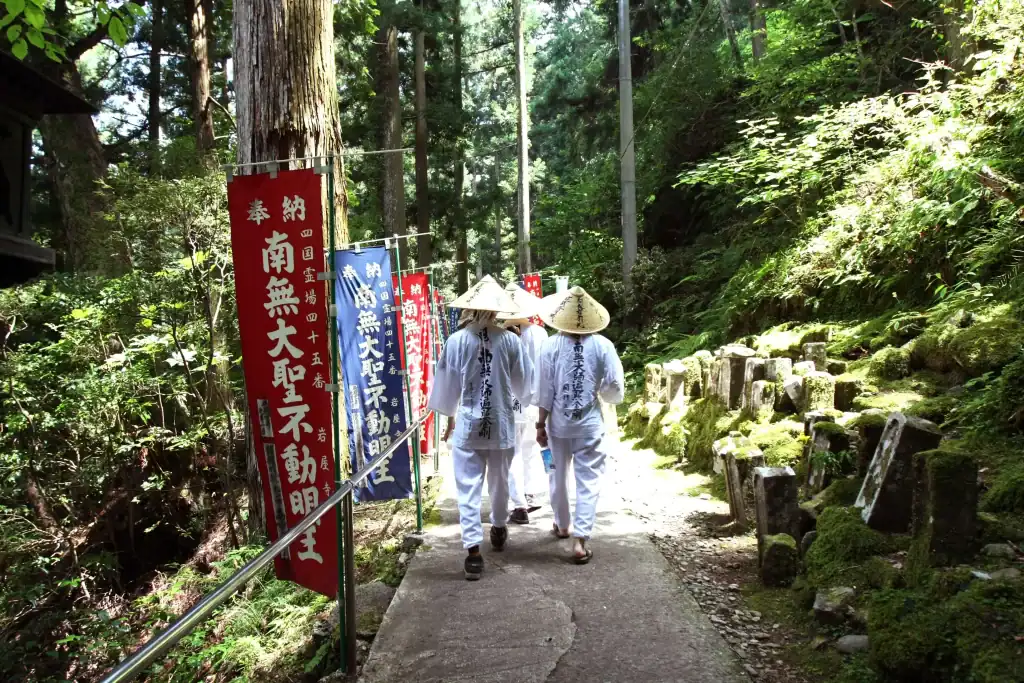
Pilgrims on the Shikoku Henro
The project revolves around three of Japan’s most famous pilgrimage trails: the Dewa Sanzan, the Kumano Kodo, and the Shikoku Henro. These ancient trails wind through mountains, and forests, taking in sacred temples and shrines, and offering a journey that connects physical adventure with inner reflection and a profound encounter with Japanese spirituality.

An illustration showing flight routes (orange) and rail links (black and white) between pilgrimage locations
The plan is to create easy-to-follow, in-depth travel itineraries for these three routes and to provide seamless connections for travelers between air, rail and local transport services. Travelers will also be assisted on these routes by use of regional travel passes and luggage delivery services.
Here are some details on the three pilgrimage routes:
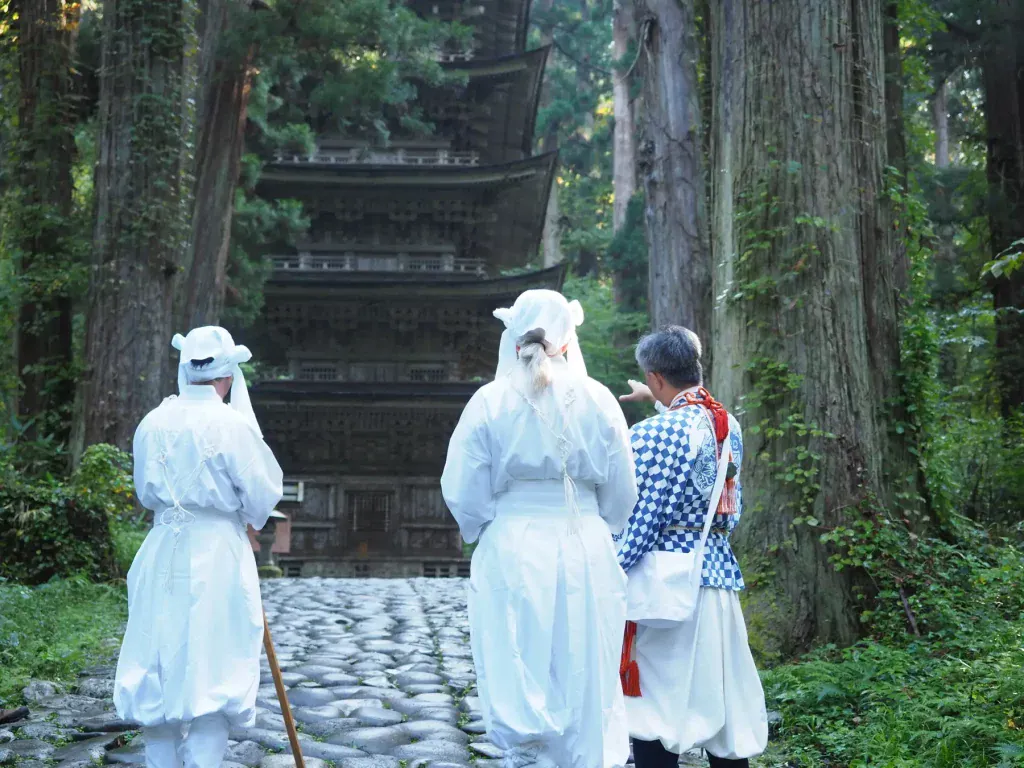
Pilgrims on Mount Haguro
The Dewa Sanzan is the collective name for three sacred mountains in Yamagata Prefecture: Mount Haguro, Mount Gassan, and Mount Yudono.
Pilgrims on Mount Haguro
For more than 1,400 years these mountains have served as important sites of pilgrimage for practitioners of Shugendo, a Buddhist religion that incorporates elements of Shinto folk belief and Taoism. Traditionally a pilgrimage to these three mountains is seen as a journey of rebirth with each mountain representing life, death and rebirth. This is a journey that offers a refreshing escape from everyday concerns and an unforgettable hike in some of Japan’s most splendid natural scenery.

The Daimonzaka stone staircase on the Kumano Kodo pilgrimage route, Wakayama
The Kumano Kodo is a 1,200-year-old network of ancient pilgrimage trails winding through the mountainous Kii Peninsula that straddles Wakayama, Nara, and Mie prefectures. These trails connect the ancient capitals of Nara and Kyoto to three grand shrines, which are collectively called the Kumano Sanzan: Kumano Hongu Taisha, Kumano Hayatama Taisha and Kumano Nachi Taisha. Other sacred locations on the network are the Yoshino and Omine mountain regions and the mountaintop temple town of Koyasan.
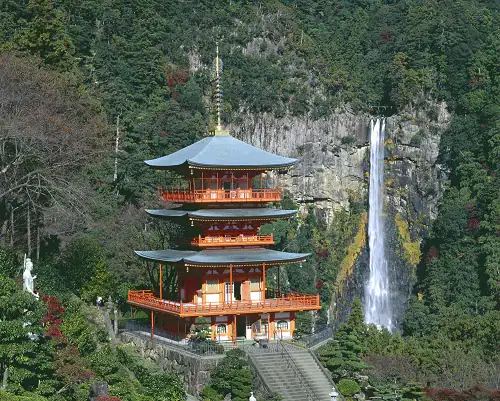
The three-storied pagoda of Seiganto-ji Temple with Nachi Falls, Wakayama
Pilgrims on this network can enjoy hikes through dense forests filled with an abundance of streams, rivers and waterfalls. The sacred sites and pilgrimage routes of the Kumano Kodo were declared a UNESCO World Heritage Site in 2004.

Osettai (お接待) — traditional hospitality given to pilgrims on the Shikoku Henro
The Shikoku Henro is a 1,200 kilometer circular route on the southern island of Shikoku that takes in 88 sacred Buddhist temples and other sacred sites associated with the monk Kukai, the founder of the Shingon school of Buddhism. Traditionally the route is followed on foot — which would take about 45 days — but some modern travelers choose to travel by bicycle, car, motorcycle or bus! For many pilgrims this is a journey of healing or deep reflection but along the route they can also enjoy delicious local cuisine, visit beautiful shrines and temples, travel through spectacular natural scenery and experience Shikoku’s legendary hospitality.
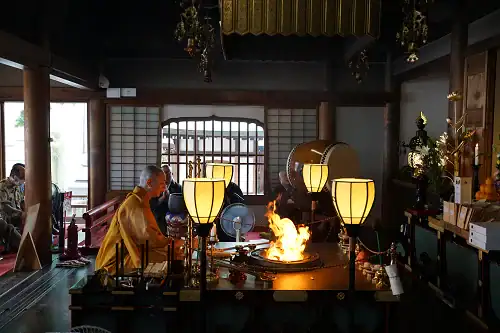
Goma fire ritual at Zentsuji Temple, the birthplace of Kukai
Comprehensive guides to these pilgrimage routes and further details about the project can be found on the new Sacred Journeys website. The website will continue to be updated as the pilgrimage project continues to evolve.
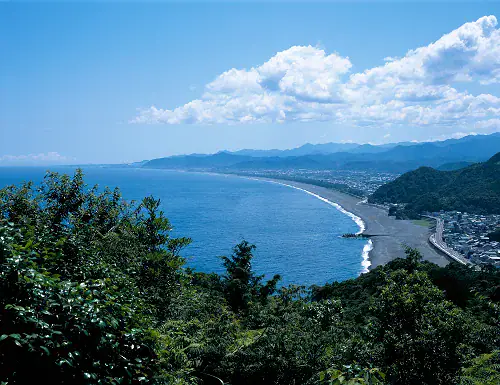
Shichiri-mihama Beach seen from the Matsumoto Pass on the Kumano Kodo, Mie Prefecture
Article by Michael Lambe. Images by Sacred Journeys/Japan Travel (1), DEGAM Tsuruoka Tourism Bureau (3, 4), Kumano Hongu Tourist Association (5), Nachi Katsuura Tourism Organization (6), NPO Network for Shikoku Henro Pilgrimage and Hospitality (7), Zentsuji Temple (8), Mie Prefecture Tourism Federation (9). All rights reserved.