A transportation IC card is one of the most useful payment tools for traveling in Japan. Unlike a Japan Rail Pass, which is a travel pass for eligible JR services, an IC card is a pay-as-you-go card for ordinary fares on local trains, subways, buses and other transport. Add money to the card, touch it to the reader when entering and leaving, and the fare is calculated and deducted automatically.
Japan’s ten major mutually compatible transportation IC cards are Suica, PASMO, ICOCA, PiTaPa, TOICA, manaca, SUGOCA, nimoca, Hayakaken and Kitaca. A card bought in one region can generally be used within participating IC card networks in other regions. This does not create one continuous national fare area, and a card may not work for a journey that crosses between separate IC card regions. Major cards can also be used at many participating convenience stores, restaurants, vending machines and station lockers.
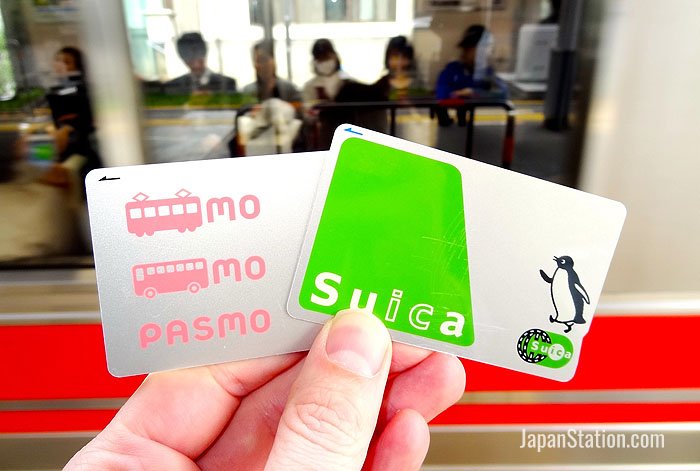
Suica and PASMO are rechargeable transportation IC cards used in Tokyo and other participating IC card areas
Table of Contents
What is an IC card in Japan?
An IC card is a reusable contactless smart card for paying transportation fares and making small electronic payments. IC stands for “integrated circuit.” Suica, PASMO, ICOCA, TOICA, manaca, SUGOCA, nimoca, Hayakaken and Kitaca are principally prepaid cards. PiTaPa differs because its main service is postpaid.
To use a transportation IC card at a railway station, touch the card to the reader at the entrance gate and touch the same card again when leaving at your destination. The system calculates the ordinary fare for the journey and deducts it from the stored balance. Participating subway, private railway, monorail and bus operators use the same basic contactless process.
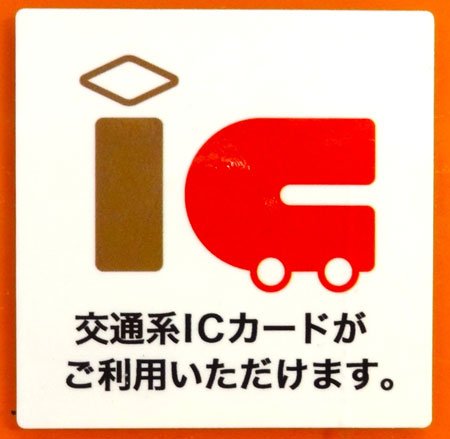
Look for the nationwide transportation IC card symbol or the logo of a compatible card
A transportation IC card removes the need to calculate the fare and buy a separate paper ticket for each ordinary local journey. It can also handle transfers between participating JR lines, subways and private railways when the complete journey remains inside a compatible IC card area.
An IC card is a payment method, not an unlimited travel pass. The stored balance normally covers only the ordinary basic fare. Limited express trains, Green Cars, reserved seats and Shinkansen services may require an additional ticket or a separately purchased reservation. Not every railway, bus or station in Japan accepts the ten major IC cards.
Getting & using prepaid IC cards
Transportation IC cards are normally sold within the regions where they are issued. Standard cards are available from designated ticket machines and ticket offices operated by participating companies. Suica and PASMO are the main Tokyo-area cards, ICOCA is widely sold in the JR West region, and other parts of Japan have their own regional cards.
Temporary visitors arriving in Tokyo can consider Welcome Suica and TOURIST PASMO. Welcome Suica and TOURIST PASMO are each valid for 28 days from the date of purchase, do not require a deposit, and do not provide a normal refund of unused value. TOURIST PASMO has been available at selected locations at Haneda Airport and Narita Airport since May 20, 2026.
The purchase price of a standard physical IC card depends on the issuer. Standard Suica, PASMO, ICOCA, TOICA, Hayakaken and Kitaca cards include a refundable 500 yen deposit, although their initial purchase amounts and available card types differ. Several issuers also offer registered, child and commuter-pass cards. Identification or proof of age may be required for a registered or child card.
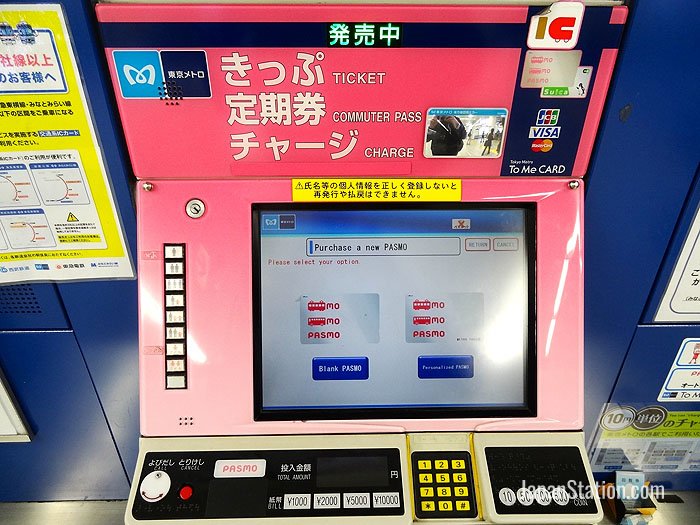
Participating station ticket machines sell and recharge transportation IC cards
At a railway station, touch the transportation IC card firmly to the contactless reader at the ticket gate. A nearby screen usually shows the fare deducted and the remaining balance. Touch the same physical card, iPhone or Apple Watch again when leaving the railway system at your destination.
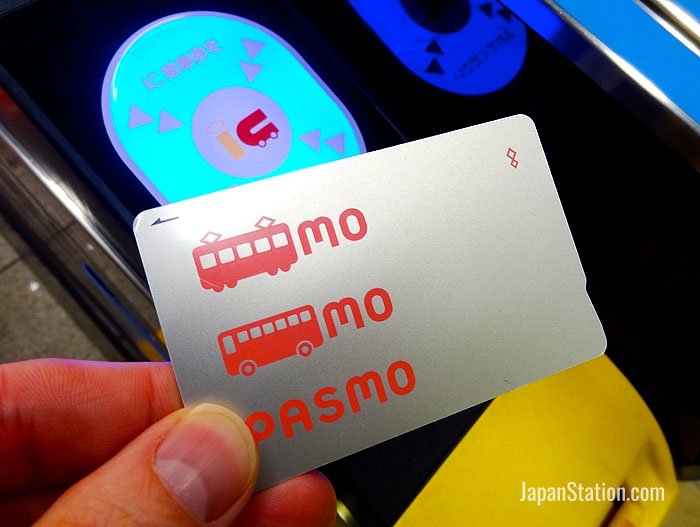
Touch the same transportation IC card to the reader when entering and leaving a station
If a transportation IC card does not contain enough value to complete a railway journey, the exit gate will not open. Add money at a compatible charging or fare-adjustment machine near the ticket gates, or ask a station attendant for help. Physical cards can commonly be recharged with cash at station machines, and cards such as PASMO and ICOCA can also be recharged at participating convenience stores.
Compatible iPhone and Apple Watch users can add Suica, PASMO or ICOCA to Apple Wallet and use the device at supported gates and payment terminals. Device requirements and supported payment cards vary. Check the current instructions from JR East, PASMO or JR West before depending on a mobile IC card.
IC card procedures on buses depend on the operator and fare system. Some buses require one touch when boarding, while others require a touch when boarding and another when getting off. Participating PASMO buses may also allow PASMO and TOURIST PASMO cards to be recharged in 1,000 yen units using 1,000 yen notes. Other bus systems may have different rules.
Refund rules are specific to the card and issuer. A standard Suica or PASMO includes a refundable 500 yen deposit, and a 220 yen handling fee may be deducted from the remaining balance when the card is returned. Return a JR East Suica through JR East and return PASMO through a participating PASMO operator. Welcome Suica and TOURIST PASMO have no deposit and do not normally refund unused value.
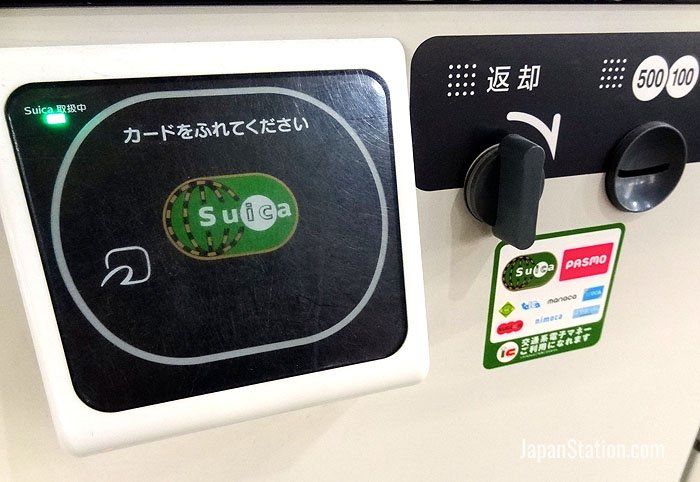
Transportation IC cards can pay for many station lockers, vending machines and other services
Shopping at convenience stores
Transportation IC cards such as Suica, PASMO and ICOCA can be used to buy food, drinks and other goods at many participating convenience stores, including branches of 7-Eleven, Lawson, FamilyMart and Ministop. Compatible cards are also accepted at many station shops, supermarkets, restaurants, cafés and other businesses.
To pay with a transportation IC card, tell the cashier that you want to use an IC card, check the amount on the payment terminal, and touch the card or mobile device to the reader. Acceptance varies by store and terminal. Look for the nationwide transportation IC card symbol or the logo of a compatible card before trying to pay.
The stored value on a compatible transportation IC card can also pay at many vending machines, coin lockers and other automated facilities. Some station lockers use the same IC card both to collect payment and as the electronic key needed to reopen the locker. Use the same physical card or mobile device when retrieving your belongings.
Interoperability
Japan’s nationwide transportation IC card mutual-use system covers Suica, PASMO, ICOCA, PiTaPa, TOICA, manaca, SUGOCA, nimoca, Hayakaken and Kitaca. A card issued in one region can generally be used for ordinary fares within another participating IC card area, even though the card has a different regional name.
For example, a PASMO purchased in Tokyo can be used on the Fukuoka City Subway, and an ICOCA purchased in Osaka can be used on participating trains and subways in Tokyo. Compatible cards can also be recharged at many participating machines and stores outside their original issuing regions.
Nationwide mutual use does not create one continuous national fare area. In most cases, an IC card cannot be used for a single journey that starts in one separate IC card region and ends in another. A card may work for local travel inside both regions without being valid for the journey across the boundary between them.
When a route crosses an IC card area boundary, buy the required conventional ticket before boarding or follow the transport operator’s instructions. Some railways, stations and bus operators do not accept the ten nationwide cards, even inside a broadly compatible region. Rural lines are more likely to require a paper ticket, cash or a separate local payment system.
PiTaPa participates in nationwide transportation mutual use, but PiTaPa is primarily a postpaid card. Outside the PiTaPa postpaid area and participating JR West postpaid area, a cash balance generally has to be added before travel. PiTaPa shopping does not participate in the nationwide electronic-money mutual-use system.
Major transportation IC cards
The ten cards in Japan’s nationwide transportation mutual-use system are Suica, PASMO, ICOCA, PiTaPa, TOICA, manaca, SUGOCA, nimoca, Hayakaken and Kitaca. Nine are principally prepaid stored-value cards. PiTaPa is principally postpaid and has application and account requirements that make it different from the other nine cards.
For most short-term travelers, the simplest choice is the major prepaid card sold where the trip begins. A traveler arriving in Tokyo can normally keep using Suica or PASMO within participating networks after reaching Osaka, while a traveler arriving in Kansai can normally keep using ICOCA within participating networks in Tokyo, Nagoya and Fukuoka. Separate IC card area boundaries and non-participating lines still apply.
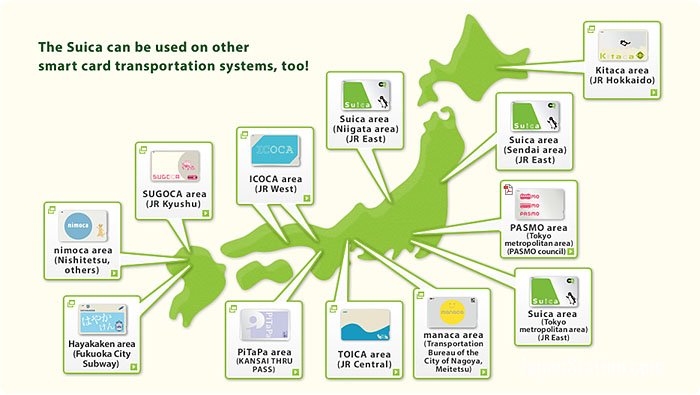
Japan’s ten major transportation IC cards work in participating service areas but do not create one continuous national fare area
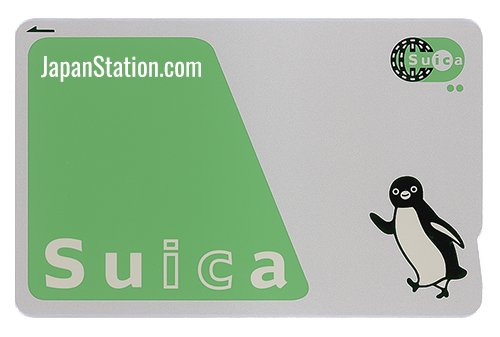
Suica Card – JR East, Tokyo and Eastern Japan
Suica is JR East’s prepaid transportation IC card for the Tokyo metropolitan area and other participating JR East IC card regions. Suica can also be used on participating trains, subways, buses and payment terminals in other parts of Japan through the nationwide mutual-use system.
A standard JR East Suica includes a refundable 500 yen deposit. Welcome Suica is a separate card for temporary visitors. Welcome Suica has no deposit, is valid for 28 days from the date of purchase, and does not provide a normal refund of unused value.
Suica cannot normally be used for one continuous journey between separate IC card regions. A traveler crossing an IC card area boundary may need to buy a conventional ticket or leave through the ticket gates before beginning a new journey.
PASMO Card – Tokyo and Surrounding Areas
PASMO is issued by participating private railway, subway and bus operators in the Tokyo metropolitan area, including Tokyo Metro. PASMO can be used on local trains, subways and buses throughout participating PASMO and Suica networks and within other compatible IC card areas in Japan.
Standard PASMO and Suica cards are largely interchangeable for ordinary transportation and compatible shopping, so a traveler normally needs only one of them. A standard PASMO includes a refundable 500 yen deposit and is subject to PASMO refund rules.
TOURIST PASMO is a special card for international visitors that became available on May 20, 2026. It is sold at selected locations at Haneda Airport and Narita Airport, is valid for 28 days from purchase, and does not require a deposit. Value added to TOURIST PASMO is not normally refundable.
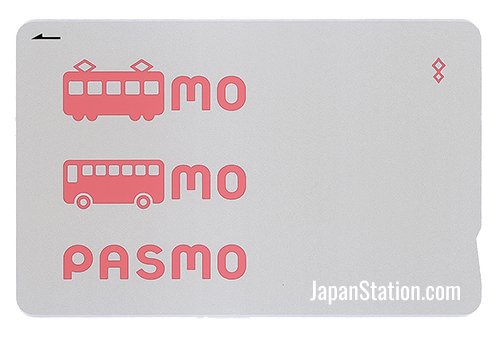
ICOCA Card – JR West, Osaka and Western Japan
ICOCA is JR West’s principal prepaid transportation IC card. It is widely used in Osaka, Kyoto, Kobe and other parts of the Kansai region, as well as in Okayama, Hiroshima and additional JR West IC card areas.
ICOCA can be used on participating trains, subways, buses and payment terminals throughout Japan’s nationwide mutual-use network. A standard ICOCA costs 2,000 yen, including a refundable 500 yen deposit and 1,500 yen of usable value. Compatible iPhone and Apple Watch users can also add or create an ICOCA in Apple Wallet.
An ICOCA balance does not by itself provide access to the Shinkansen or cover limited express, reserved-seat or premium charges. Purchase any additional ticket or reservation required for the train before boarding.
PiTaPa Card – Kansai Area
PiTaPa is used by participating private railways, subways and buses in the Kansai region, including networks serving Osaka, Kyoto, Kobe, Nara and surrounding areas. PiTaPa postpaid service is also available in participating parts of the JR West network.
PiTaPa differs from Suica, PASMO, ICOCA, TOICA, manaca, SUGOCA, nimoca, Hayakaken and Kitaca because PiTaPa is primarily postpaid. A user must apply for PiTaPa, complete the required review, and link an account from which eligible transportation and shopping charges are collected.
When PiTaPa is used in nationwide mutual-use areas outside its postpaid network, value generally has to be added to the card in advance. PiTaPa shopping is not part of nationwide electronic-money mutual use. The application and account requirements usually make ICOCA more practical than PiTaPa for a short-term visitor to Kansai.
TOICA Card – JR Central and the Tokai Region
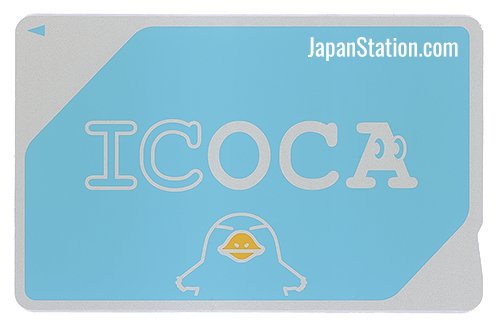
TOICA is JR Central’s prepaid transportation IC card for participating conventional railway lines in the Tokai region around Nagoya. A standard TOICA costs 2,000 yen, consisting of a refundable 500 yen deposit and 1,500 yen of usable value.
TOICA can be used on participating transportation and at compatible payment terminals in other major IC card areas. TOICA cannot normally be used for one continuous journey across separate IC card regions, even when the card works for local travel inside both regions.
A TOICA balance does not automatically cover Shinkansen travel. A traveler using a supported ticketless Shinkansen service must purchase the required reservation separately and register the TOICA card with that service.
manaca Card – Nagoya Area
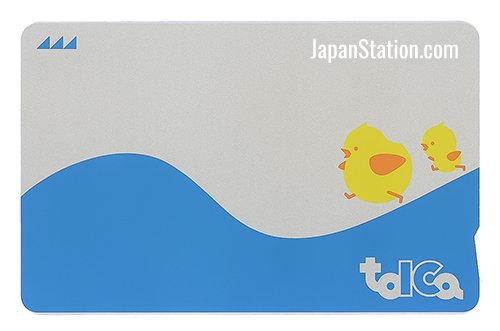
manaca is a rechargeable transportation IC card used by Meitetsu, the Nagoya City Transportation Bureau and other participating operators in and around Nagoya. manaca can be used on Meitetsu trains and buses, Nagoya municipal subways and buses, the Toyohashi Railway, the Aonami Line and the Yutorito Line.
A manaca card can also be used for electronic payments at participating shops and for transportation within other compatible IC card areas in Japan. Available products include non-registered, registered, child and commuter-pass manaca cards.
SUGOCA Card – JR Kyushu
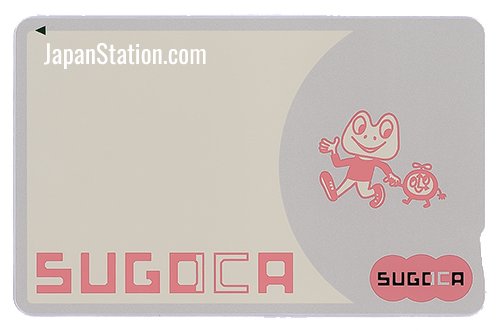
SUGOCA is JR Kyushu’s rechargeable transportation IC card. SUGOCA can be used on participating JR Kyushu railway lines and at compatible buses, shops and other payment terminals.
SUGOCA participates in Japan’s nationwide mutual-use system and can be used within compatible IC card areas outside Kyushu. A SUGOCA balance does not replace any additional Shinkansen, limited express or reserved-seat ticket required for a journey.
nimoca Card – Fukuoka and Other Areas
nimoca is a rechargeable transportation IC card associated with Nishi-Nippon Railroad, commonly known as Nishitetsu, and other participating operators. nimoca is used on trains and buses in Fukuoka and in several other regional transport networks.
A nimoca card can also be used for shopping at participating businesses and for transportation within compatible IC card areas elsewhere in Japan. Nationwide compatibility does not guarantee acceptance on every operator or permit continuous travel across separate IC card regions.
Hayakaken Card – Fukuoka City Subway
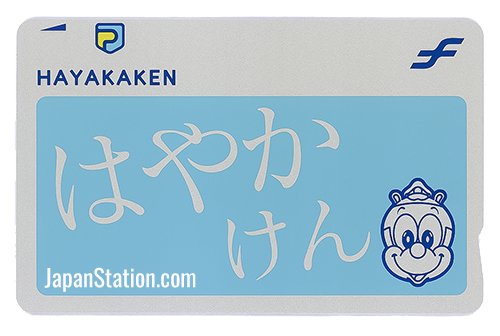
Hayakaken is the rechargeable transportation IC card issued by the Fukuoka City Subway. Hayakaken can be used on all Fukuoka City Subway lines and for electronic payments at participating stores displaying a compatible IC card mark.
Hayakaken participates in nationwide transportation mutual use. Suica, PASMO, ICOCA and the other major compatible cards can likewise be used on the Fukuoka City Subway. Hayakaken purchase prices include a refundable 500 yen deposit.
Kitaca Card – JR Hokkaido
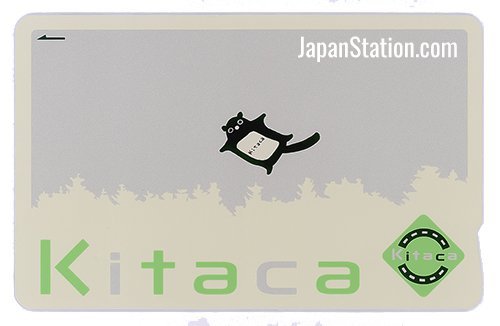
Kitaca is JR Hokkaido’s rechargeable transportation IC card. Within the JR Hokkaido railway network, IC cards can be used in the Sapporo-Asahikawa area and in the separate Hakodate area.
The Sapporo-Asahikawa and Hakodate IC card areas are not connected for continuous IC card travel. Kitaca cannot be used for a single railway journey between Hakodate and Sapporo, and it cannot be used to reach Hokkaido stations outside the supported areas. Buy the required ticket before boarding for those journeys.
Kitaca can also be used on participating transportation and at compatible payment terminals elsewhere in Japan. A standard non-registered Kitaca costs 2,000 yen, including a refundable 500 yen deposit and 1,500 yen of usable value.
Article and original photos by Tim Hornyak. All rights reserved. Last updated 12-Aug-2026.